Pranav S. Kulkarni, BVSc & AH, MSc, PhD
Postdoctoral researcher, UC Davis Weill School of Veterinary Medicine
From zoonotic spillover in a warming world to the economics of herd health, I study disease where animals and people meet.
I'm a veterinary epidemiologist working at the intersection of animals, people, and their shared environment. I build a range of One Health models, each designed to answer a different question: how infections move through multiple hosts and ecosystems, where outbreaks and spillovers are likely to occur, what burden a disease carries, and how climate change and policy reshape animal and disease systems. Depending on the question, I use statistical models, supervised and unsupervised machine learning, or mechanistic mathematical models.

In the news
Our 2026 study on climate and arenavirus spillover was picked up by outlets around the world, from Science News to The New York Times. A follow-up preprint takes the same approach to hantaviruses worldwide.
“These diseases are not on the public health officials' radar.”
“We are basically expanding the human footprint on places where it hasn't been.”
“These are high impact diseases, but they are fairly neglected…”
Climate-driven changes in zoonotic risk of arenaviral hemorrhagic fevers in South America
Kulkarni PS, Flores-Pérez NY, Jian AH, Bird BH, Johnson CK, Uhart M, Pandit PS. npj Viruses 4, 23 (2026).
Three rodent-borne arenaviruses, Guanarito virus (GTOV), Machupo virus (MACV) and Junín virus (JUNV), cause hemorrhagic fevers in South America that can kill up to about a third of patients. They get far less attention than their African relative, Lassa virus. We combined machine-learning habitat models for six rodent reservoirs with climate projections for 2041–2060 and human population data to estimate where people's risk of infection is likely to rise.
The headline: risk doesn't just grow, it moves, into places where doctors and public health systems have never had to deal with these diseases.
- Guanarito virus (GTOV)Venezuelan HFProjected to spread beyond central Venezuela into Colombia, northern Brazil, and the border regions of Suriname.
- Machupo virus (MACV)Bolivian HFProjected to climb from the Bolivian lowlands into the Andean foothills and mountains.
- Junín virus (JUNV)Argentine HFProjected to shift within Argentina, easing in some grasslands while rising in new areas.
Ecological cascades and future hantavirus spillover risk in a changing climate
Much of the arenavirus coverage ran alongside the hantavirus outbreak on the MV Hondius cruise ship, and several stories connected the two families of rodent-borne viruses. Our follow-up applies the same modeling framework to every known zoonotic hantavirus, worldwide.
Climate change won't just raise hantavirus risk everywhere; it will redraw where that risk falls.
Pandit P, Jian AH, Gupta A, Kulkarni P. bioRxiv, 2026. Not yet peer reviewed.
Read the preprint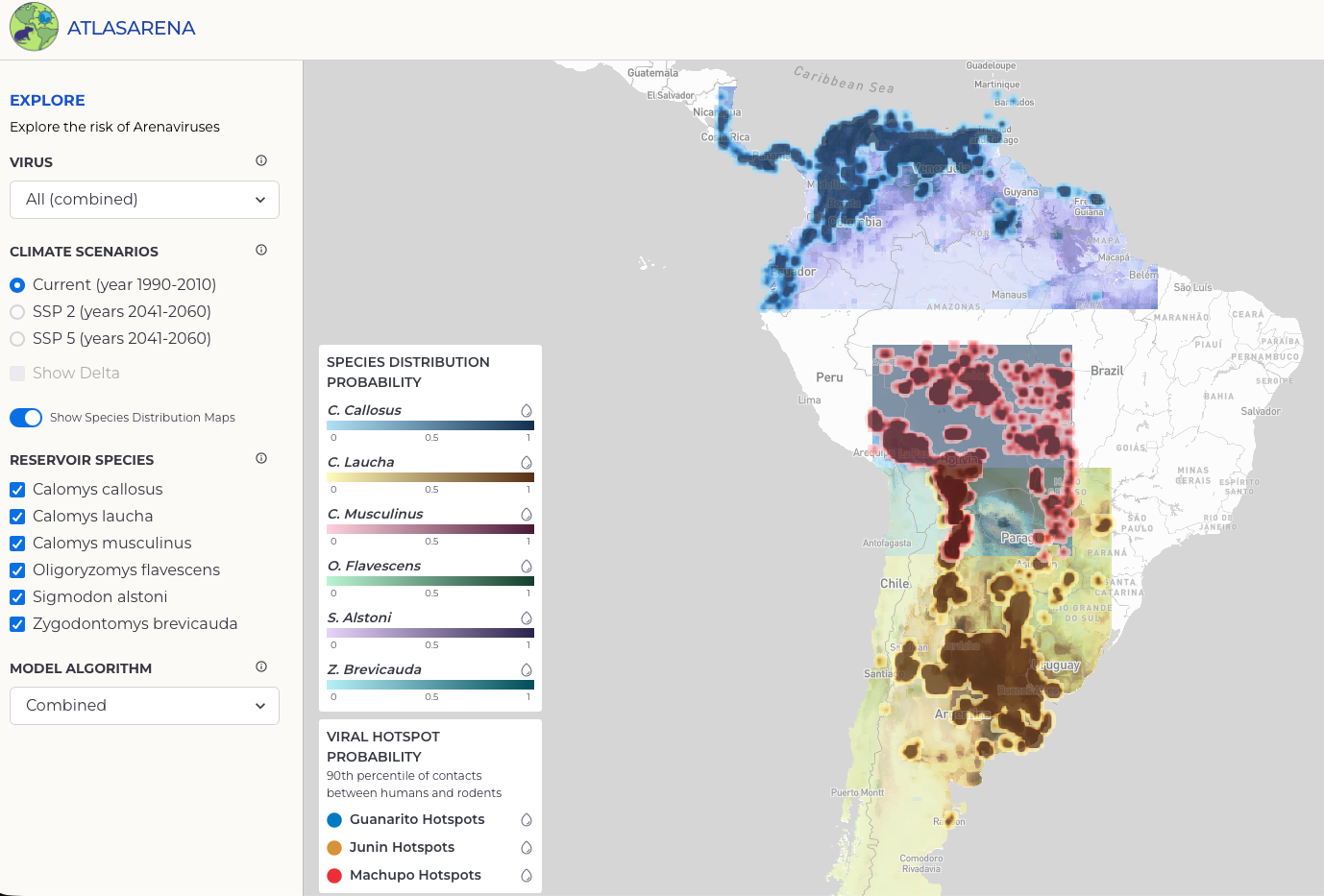
AtlasArena
An open, interactive platform for mapping climate-driven spillover risk, funded by the Wellcome Trust. It's built on the arenavirus models above: pick a virus, a climate scenario, and reservoir species, and see where the risk to people sits now and where it may move by 2041–2060.
The same framework underpins our hantavirus preprint.
Explore AtlasArenaFeatured in
All coverage
Research vision
Diseases that cross between animals and people are among the hardest to predict, track, or stop. They move through multiple hosts, travel on vectors, and shift with climate and land use in ways no single dataset captures. As a veterinarian and quantitative modeler, I build frameworks that make these systems predictable enough to act on.
Find the risk
Statistical and machine learning tools that turn disease data into early warnings, identify vulnerable communities, and guide where limited resources go.
Model the system
Models of complex multi-host and vector-borne disease that link emergence and spread to changes in climate, environment, and land use.
Test what works
Rigorous study designs that show whether health policies deliver what they promise.
Supporting all three: sound data collection, stronger causal inference, carefully curated data, and open-source code that others can adapt.
This work is only useful in partnership with public health officials, local governments, and community leaders; with agencies such as USDA-APHIS; and with virologists, entomologists, clinicians, economists, immunologists, and epidemiologists worldwide.
Current and past projects
One Health disease modeling
In the EpiPandit Lab and the One Health Institute, I model diseases at the interface of wildlife, livestock, and people, from climate-driven spillover to outbreak burden on farms.
AtlasArena
Mapping the climate-driven spillover risk of New World arenaviruses by linking human exposure to changing distributions of their rodent reservoirs. Related work extends the approach to the Junín virus reservoir and to hantaviruses.
H5N1 avian influenza in California dairy herds
Building a nested agent-based model of how highly pathogenic avian influenza moves within and between dairy herds, and estimating its transmission parameters from the California outbreak.
Interactive web tool for simulating HPAI outbreaks in dairy herds
Details coming soon
Burden of the HPAI outbreak in dairy cows
Details coming soon
Drivers of failure to thrive in newborn piglets
Details coming soon
Foundation models for zoonotic viral genomes
Details coming soon
Dairy herd health, economics, and policy
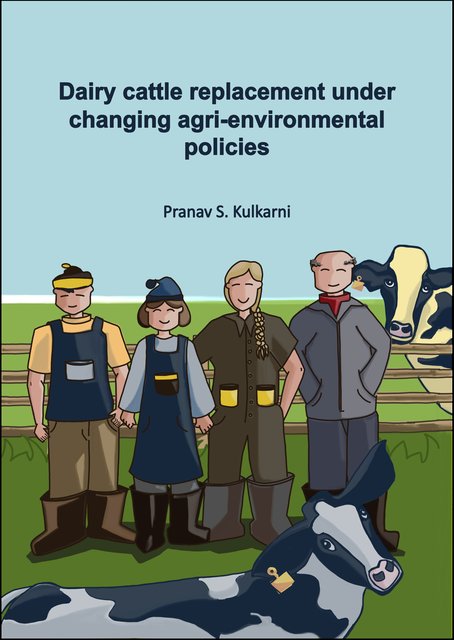
My PhD asked how Dutch dairy farmers decide which cows to replace, and how environmental policies that cap herd sizes change those decisions and their costs.
Replacement decisions under policy constraints
Survival analysis of national cow records, farmer surveys, and dynamic programming models of herd economics. The thesis, Dairy cattle replacement under changing agri-environmental policies, is free to read.
Genetics of infectious disease
Separating genetic susceptibility from infection exposure for digital dermatitis in Dutch dairy cattle.
Methods I use
Species distribution modeling, spatio-temporal analysis, supervised and unsupervised machine learning, agent-based and herd simulation, survival analysis, Bayesian optimization, Markov decision processes and dynamic programming, and Monte Carlo simulation.
I program mainly in R and Python, with QGIS and JavaScript for Google Earth Engine for spatial work, and Bash scripting for running analyses at scale. I build interactive web apps with Shiny and Streamlit, and also work with SAS and online survey platforms.
Publications
New: our hantavirus preprint extends the arenavirus work worldwide. For citation counts and the full list, see Google Scholar.
Talks & workshops
Recent invited talks, presentations, and the workshops I've co-led.
- 2026Climate change and zoonotic disease risk modelingInvitedWith Dr. Pranav Pandit, UC Davis. Why we model disease, the main types of models, what makes disease systems hard to model, and a worked example from our arenavirus and hantavirus research.Cohab3, Third International Conference on Health and Biodiversity, Galway, Ireland
- 2026Co-instructor, AI and data-driven epidemiology workshopSVEPM, London
- 2025Estimating transmission parameters of the HPAI outbreak in dairy cowsWestern States Modeling Symposium, online
- 2025Co-instructor, AI/ML in disease ecology (20-hour workshop)EEID, University of Notre Dame
- 2024AtlasArena17th ISVEE, Sydney
- 2024Climate-driven risk of zoonotic arenaviral spillover in South AmericaEEID, Stanford (poster) and UC Davis Postdoctoral Symposium (talk)
Earlier talks
- 2023Economic impact of agri-environmental policies on replacement in Dutch dairy cattleISESSAH, Helsinki
- 2022Impact of national agricultural policy on the survival of Dutch dairy cows16th ISVEE, Halifax Bursary award
- 2022Dutch dairy farmers' perspectives on culling reasons and strategiesVEEC Study Day, Wageningen; ISESSAH, Halifax (poster)
- 2021Survival analysis of Dutch dairy farmers' replacement strategies over 10 years of policy changeSVEPM, Toulouse/online Bursary award
- 2015Genotyping HF crossbred cattle for beta-casein genesICBB, Pune (poster) Best poster award
Teaching
Statistics and epidemiology for veterinary and public health students.
Student evaluations of 4.85/5 (2024) and 4.9/5 (2025); 2026 evaluations pending.
I've also supervised graduate and undergraduate theses, and wrote for the Academic Transfer blog from 2019 to 2024.
Background
I trained as a veterinarian in India and spent a year in large-animal practice before moving into epidemiology.
I'm an invited full member of Sigma Xi, served on the scientific committee for ISESSAH 2026 in Bangkok, Thailand, and am active in the Open Science Community Utrecht.
- Postdoctoral researcherOne Health Institute and Dept. of Population Health & Reproduction, UC Davis, 2023 to now
- PhD, 2024Wageningen University & Research and Utrecht University (joint degree)
- MSc, 2018Wageningen University & Research
- BVSc & AH, 2015Maharashtra Animal and Fishery Sciences University, Nagpur
Peer review
25 manuscripts reviewed for 10 journals
- Journal of Dairy Science 7
- Preventive Veterinary Medicine 6
- PLOS Global Public Health 3
- Livestock Science 2
- Veterinary and Animal Science 2
- Agricultural Systems 1
- BMC Veterinary Research 1
- F1000Research 1
- Frontiers in Veterinary Science 1
- Preventive Veterinary Medicine: Regional Studies and Reports 1